Vision
A painting begins as a feeling, long before it becomes an image.
Fatma Lootah rarely enters the studio knowing what a work will become. She lets colour, gesture and memory lead, and waits for the image to arrive on its own. Painting, for her, is less an act of construction than an act of listening.
For more than 5 decades, and for 40 years between Dubai and Verona, between the silence of the desert and the experiments of the European avant-garde, that patience has shaped a body of work with a single direction: from the material to the spiritual. From the earth beneath our feet to the light we carry within.
Read together, her paintings describe one passage in 6 movements.
Earth
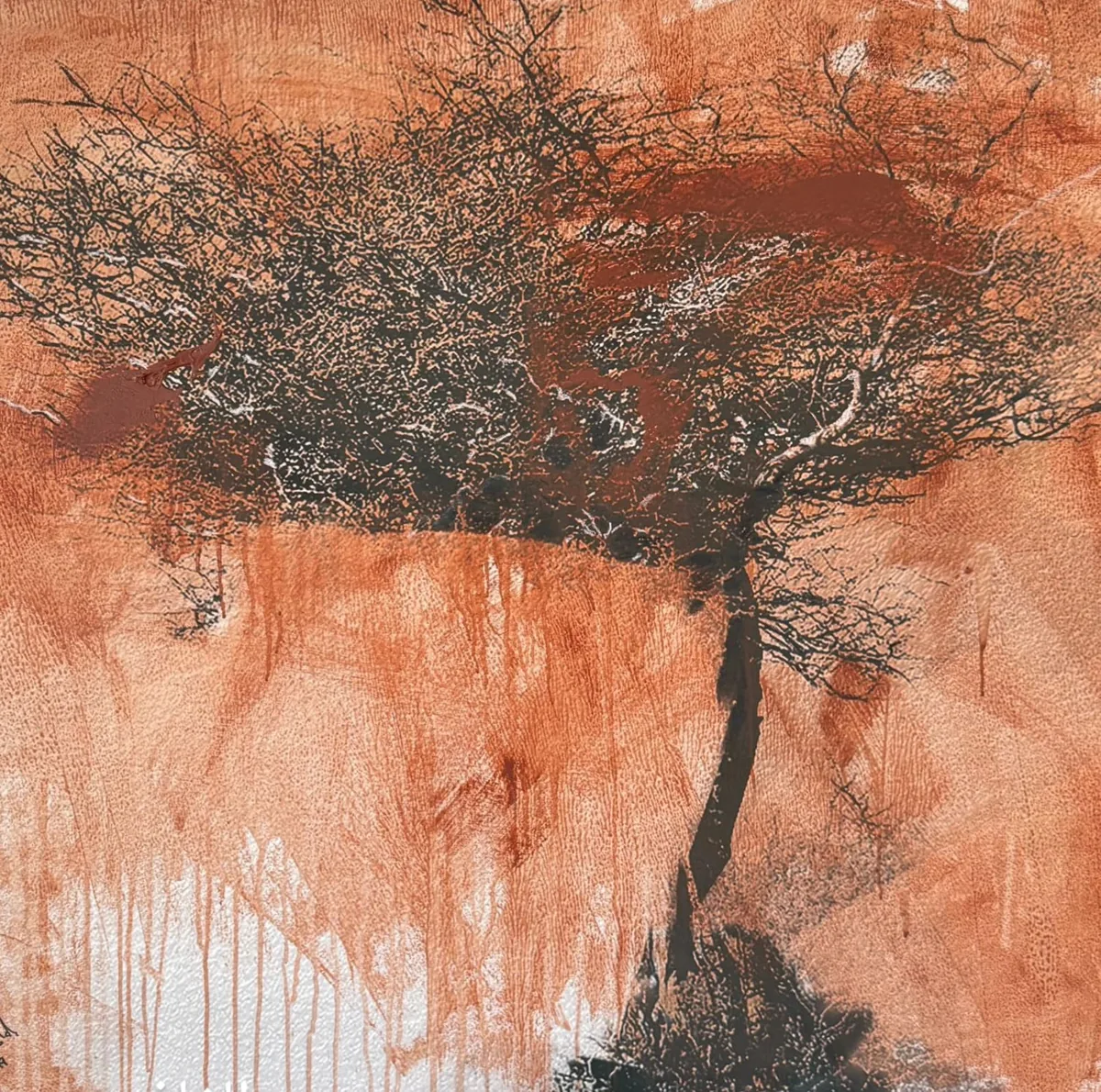
Everything begins with the ground. The desert, the red sand, the solitary tree and the colours of the Emirates return throughout her work, not as scenery but as origin. For Lootah the desert is the first inheritance, a wealth older than oil, and a place of silence: the place where a person can finally hear what lies beneath the noise.
After her words in The National, 2015
Body
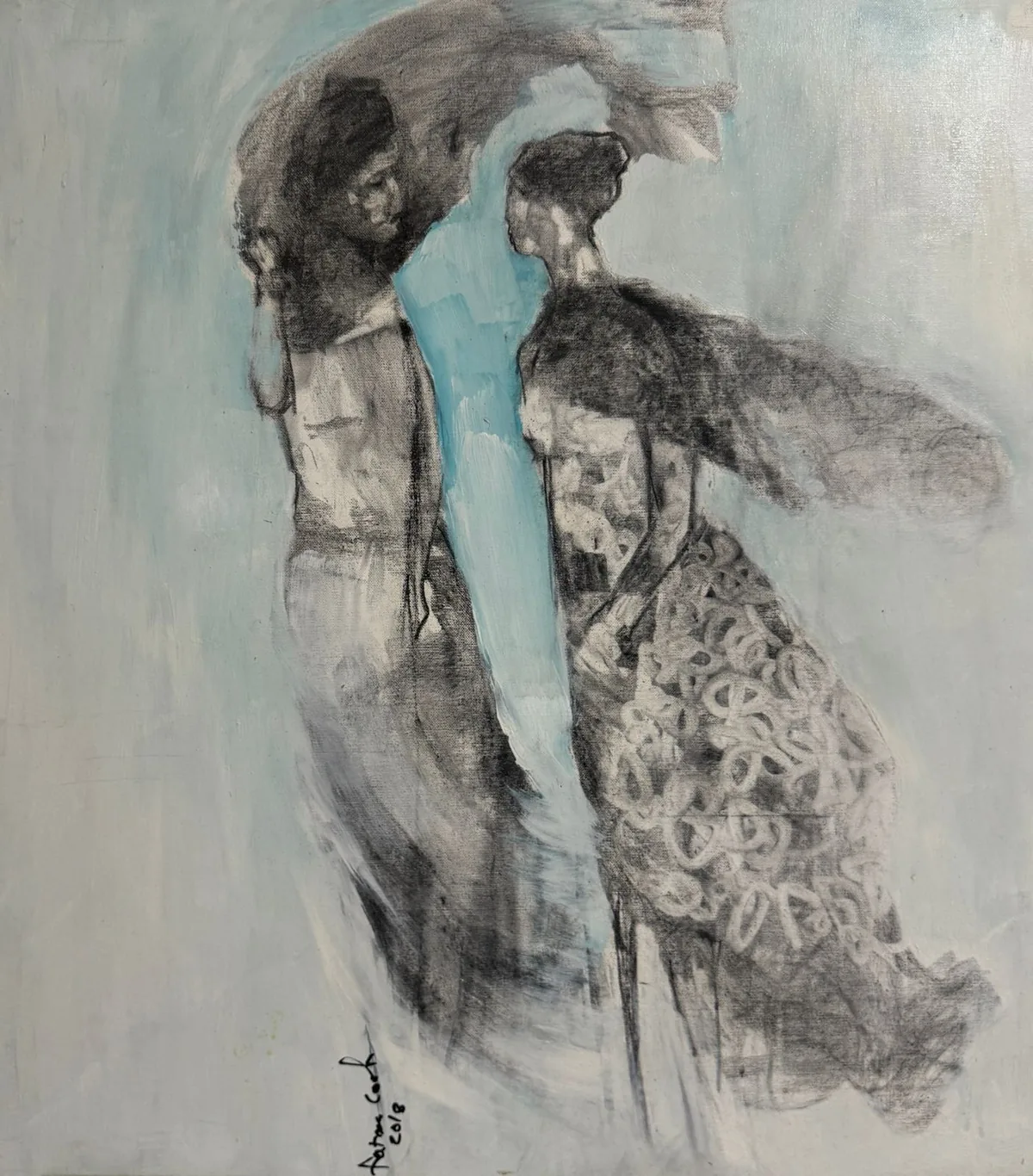
In Italy in the 1980s, performance art turned creation into a physical act. The body became gesture, rhythm and breath: no longer only something to depict, but the instrument that leaves its trace on the surface. Every sweeping stroke and every drip still carries that presence; painting remains, for her, an act of the whole body.
Memory
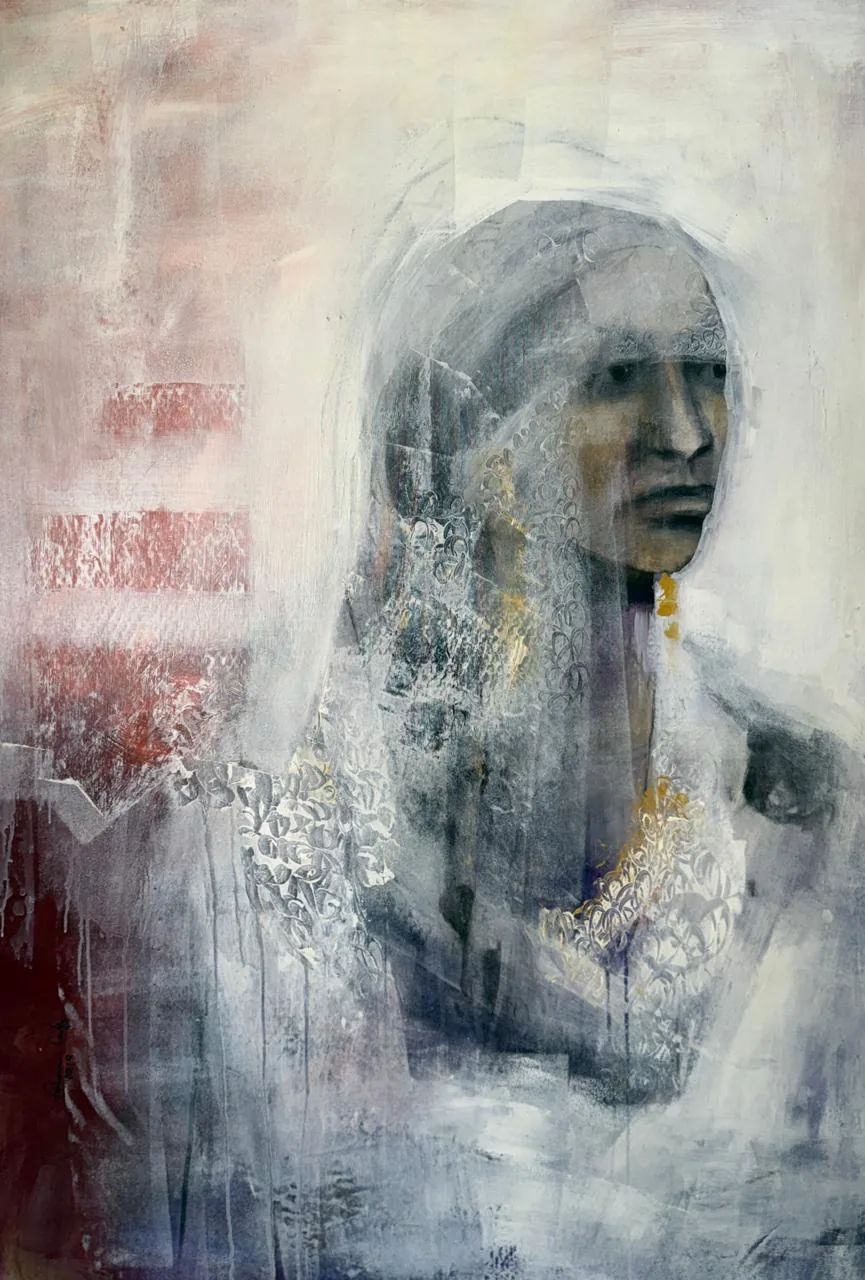
From the body comes memory. Women, faces, garments, henna and rituals surface on the canvas, half revealed and half dissolved. They do not return as nostalgia. They return as something still alive, asking to be carried forward.
Belonging
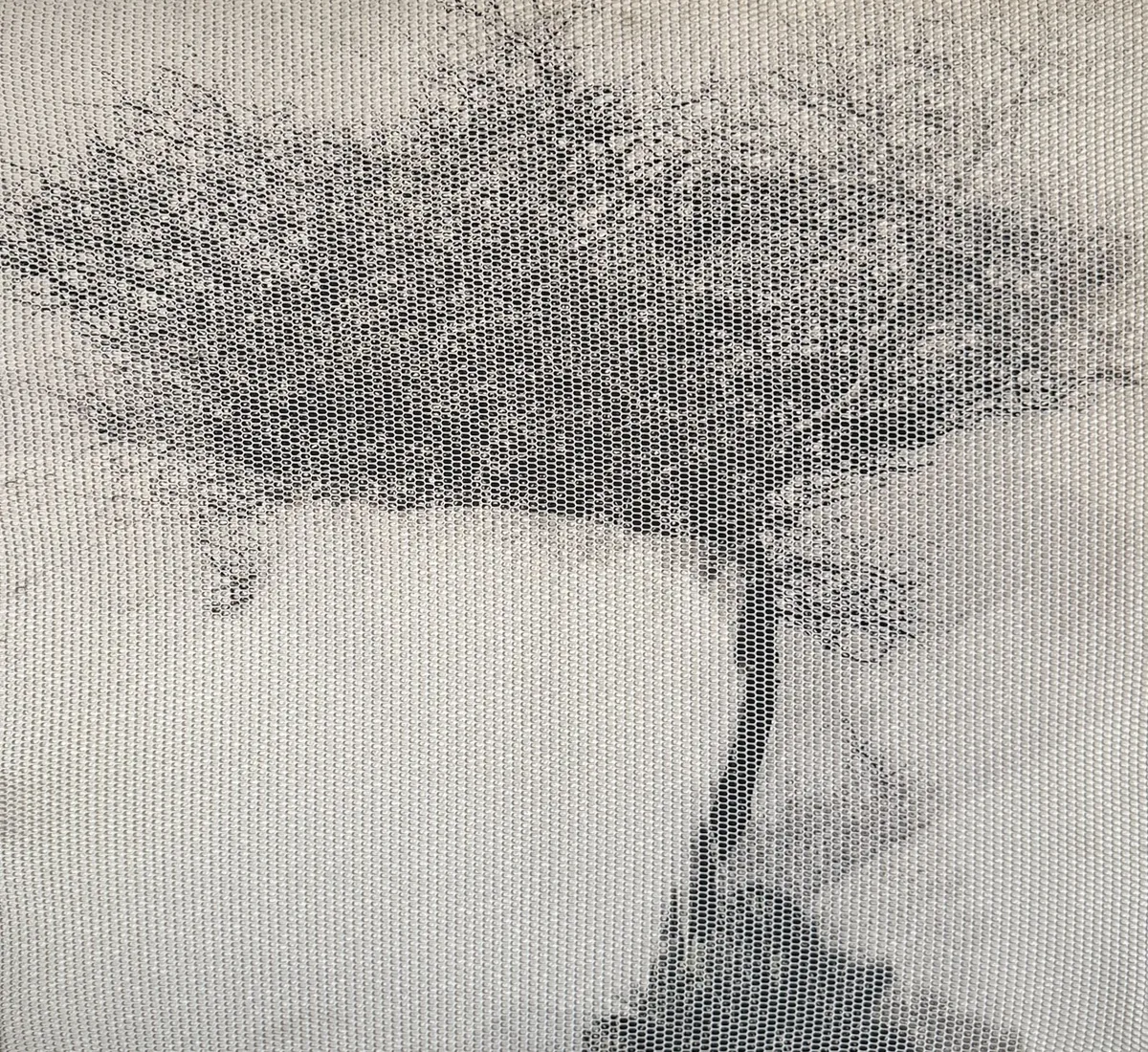
For an artist who has lived most of her life between 2 countries, belonging is not an address. It is a root system. Like the desert tree that sends its roots deep beneath the dunes to reach hidden water, some connections hold even when life takes us far from where we began.
Spirituality
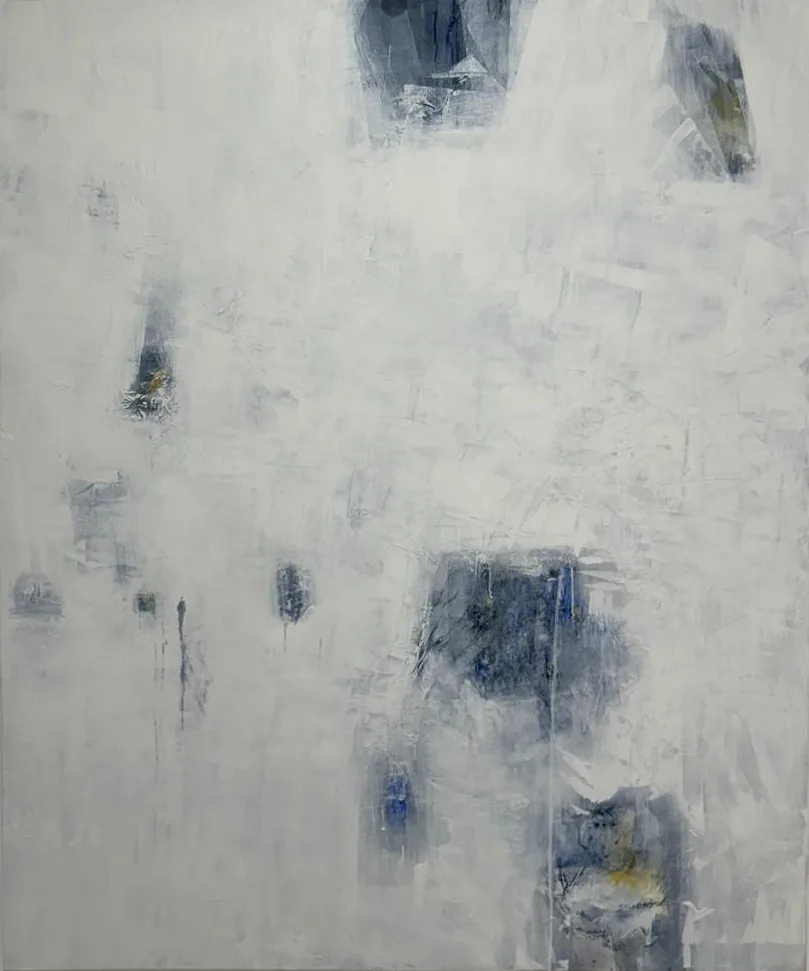
Gradually the image empties and grows quiet. The desert becomes silence, memory becomes presence, matter becomes contemplation. Form steps aside to make room for an inner space, as in the abstract series Journey into Infinity. The same search guided the monumental installation Miraj at the Sharjah Islamic Arts Festival (2018–19) and Siraj at the Sharjah Calligraphy Museum (2025–26).
Light
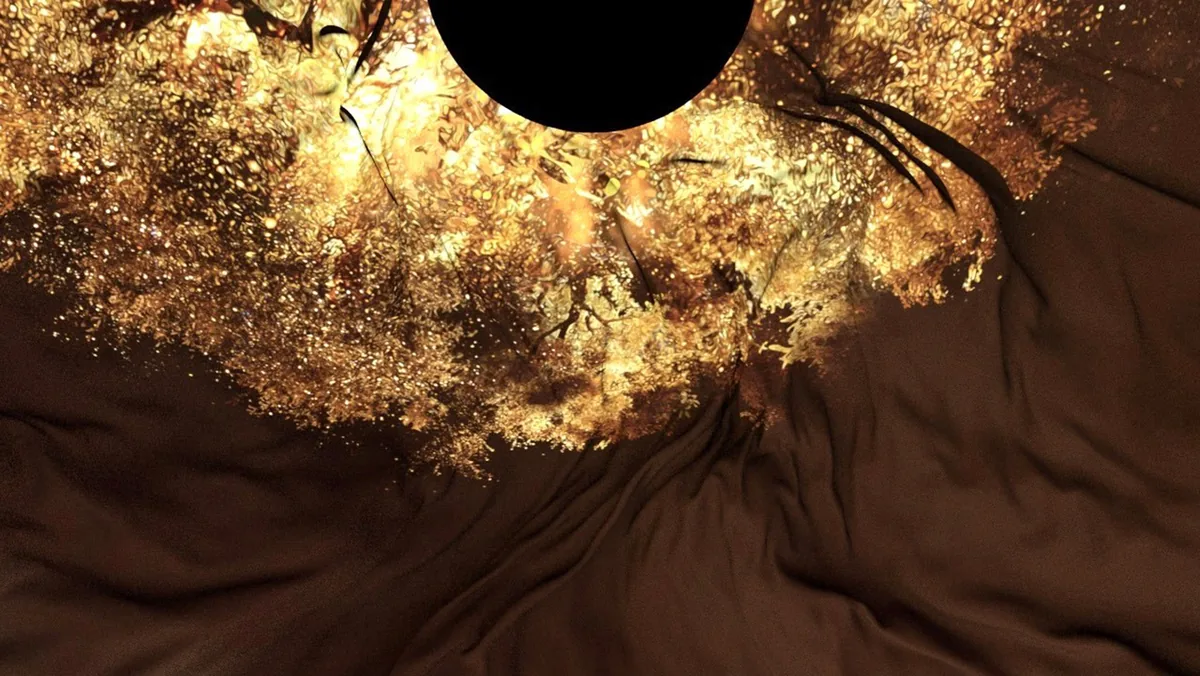
Noor ʿAla Noor, Al Wasl Plaza, 2025 · Courtesy Caterina Vicaretti
And finally, light: not only something seen, but knowledge, peace, hope and transformation. It is what she searches for within herself, and what she hopes to pass on to whoever stands in front of the work. In 2025 that search took monumental form: Noor ʿAla Noor, Light upon Light, projected across the full 130-metre dome of Al Wasl Plaza at Expo City Dubai.
After The National, November 2025
Art is not only something to be seen. It is something to be felt.
This is the thread that runs through the whole body of work. Its 4 chapters trace a similar passage, ending in light:
- I Women, Memory & Heritage Body · Memory The human presence: women as keepers of gesture, ritual and continuity.
- II Horses & Landscapes Earth · Belonging The land remembered: the desert, the horse, the tree that holds its ground.
- III Abstraction Spirituality The inner space: colour freed from the image.
- IV Siraj Light The night sky on plexiglass: light held, reflected and returned.